;%7D .st6%7Bfill-rule:evenodd;clip-rule:evenodd;fill:url(%23SVGID_2_);%7D %3C/style%3E%3Cg%3E%3Cg%3E%3Cpath class='st0' d='M24.4,158.7v28H21V164L12.2,176L3.4,164v22.7H0v-28h3.6l8.6,11.7l8.6-11.7H24.4z'/%3E%3Cpath class='st0' d='M36.8,167.5c2.7,0,5,1,6.9,2.9c1.9,1.9,2.8,4.3,2.8,6.9c0,2.7-0.9,5-2.8,6.9c-1.9,1.9-4.1,2.9-6.9,2.9 c-2.7,0-5-1-6.9-2.9c-1.9-1.9-2.8-4.3-2.8-6.9c0-2.7,0.9-5,2.8-6.9C31.8,168.4,34.1,167.5,36.8,167.5z M32.4,172.5 c-1.2,1.3-1.8,2.9-1.8,4.8c0,1.9,0.6,3.5,1.8,4.8c1.2,1.3,2.7,1.9,4.4,1.9c1.7,0,3.1-0.6,4.4-1.9c1.2-1.3,1.9-2.9,1.9-4.8 c0-1.9-0.6-3.5-1.9-4.8c-1.2-1.3-2.7-1.9-4.4-1.9C35.1,170.6,33.7,171.2,32.4,172.5z'/%3E%3Cpath class='st0' d='M57.1,171.6c-1.5,0.2-2.7,0.9-3.6,1.9c-0.8,1-1.3,2.3-1.3,3.9v9.3h-3.4v-17.8h3.4v2.5 c0.5-1.4,1.6-2.3,3.2-2.9L57.1,171.6z'/%3E%3Cpath class='st0' d='M62.1,177.3L62.1,177.3c0,1.9,0.6,3.5,1.8,4.8c1.2,1.3,2.7,1.9,4.4,1.9c1.7,0,3.1-0.7,4.4-2 c0.2-0.2,0.5-0.6,1-1.2l3.2,1.2c-0.5,0.8-1,1.6-1.6,2.2c-1.9,2-4.2,3-6.9,3c-2.7,0-5-1-6.9-2.9c-1.9-1.9-2.8-4.3-2.8-6.9 c0-2.7,0.9-5,2.8-6.9c1.9-1.9,4.2-2.9,6.9-2.9c2.7,0,5,1,6.9,3c1.6,1.7,2.4,4,2.4,6.8H62.1z M62.7,174.2h11.2 c-0.8-2.4-2.6-3.6-5.6-3.6C65.4,170.6,63.6,171.8,62.7,174.2z'/%3E%3Cpath class='st0' d='M97.5,161.8v24.9h-3.4v-24.9h-6.4v-3h16.2v3H97.5z'/%3E%3Cpath class='st0' d='M105.9,158.7h3.4v10.2c0.6-0.6,1.8-1,3.5-1c2.2,0,3.9,0.7,5.2,2.1c1.3,1.4,2,3,2,5v11.6h-3.4v-11.5 c0-1.2-0.4-2.2-1.2-3c-0.8-0.8-1.7-1.2-2.7-1.2c-1,0-1.9,0.4-2.6,1.1c-0.4,0.5-0.7,0.9-0.9,1.3v13.2h-3.4V158.7z'/%3E%3Cpath class='st0' d='M141.8,186.7h-3.4v-3.1c-1.3,2.4-3.4,3.6-6.1,3.6c-2.7,0-5-1-6.9-2.9c-1.9-1.9-2.8-4.3-2.8-6.9 c0-2.7,0.9-5,2.8-6.9c1.9-1.9,4.2-2.9,6.9-2.9c2.7,0,4.7,1.2,6.1,3.5v-2.1h3.4V186.7z M138.4,178.7v-2.8c-0.2-1.3-0.8-2.4-1.7-3.3 c-1.3-1.3-2.7-2-4.4-2c-1.7,0-3.1,0.6-4.4,1.9c-1.2,1.3-1.8,2.9-1.8,4.8c0,1.9,0.6,3.5,1.8,4.8c1.2,1.3,2.7,1.9,4.4,1.9 c1.7,0,3.1-0.7,4.4-2C137.6,181.1,138.2,180,138.4,178.7z'/%3E%3Cpath class='st0' d='M148.3,173.4v13.2H145v-17.8h3.4c0.6-0.6,1.8-1,3.5-1c2.1,0,3.9,0.7,5.2,2.1c1.3,1.4,2,3,2,5v11.6h-3.4v-11.5 c0-1.2-0.4-2.2-1.2-3c-0.8-0.8-1.7-1.2-2.7-1.2c-1,0-1.9,0.4-2.6,1.1C148.8,172.6,148.5,173,148.3,173.4z'/%3E%3Cpath class='st0' d='M175.1,186.4c0,1.5-0.5,2.8-1.6,3.8c-1,1-2.7,1.6-4.9,1.6v-2.9c1.2,0,2-0.2,2.4-0.6c0.4-0.5,0.7-1.2,0.7-2.1 v-27.5h3.4V186.4z'/%3E%3Cpath class='st0' d='M185.8,186.9c-2.3,0-4-0.7-5.4-2.1c-1.3-1.4-2-3.1-2-5.1v-10.9h3.4v10.8c0,1.2,0.4,2.2,1.2,3 c0.8,0.8,1.7,1.2,2.8,1.2c1,0,1.9-0.4,2.7-1.2c0.8-0.8,1.2-1.8,1.2-3v-10.8h3.4v10.9c0,2-0.7,3.7-2.1,5.1 C189.7,186.2,188,186.9,185.8,186.9z'/%3E%3Cpath class='st0' d='M200.5,177.8c-1.3-0.7-2.1-1.3-2.6-1.8c-0.9-1-1.4-2.1-1.4-3.3c0-1.2,0.4-2.3,1.3-3.3c0.9-0.9,2-1.4,3.4-1.4 s2.4,0.4,3.2,1.3c0.8,0.9,1.3,1.8,1.3,2.9v0.5l-3,1.3c-0.2-1.5-0.4-2.3-0.6-2.6c-0.2-0.3-0.5-0.4-0.8-0.4c-0.3,0-0.6,0.2-0.9,0.4 c-0.3,0.3-0.4,0.7-0.4,1.2c0,0.5,0.2,0.9,0.5,1.2c0.2,0.2,0.7,0.6,1.5,1.1c1.4,0.8,2.4,1.5,3.1,2.2c1,1.1,1.5,2.4,1.5,3.8 c0,1.5-0.5,2.8-1.6,3.9c-1.1,1.1-2.4,1.7-4,1.7c-1.6,0-2.9-0.6-4-1.7c-1.1-1.1-1.6-2.5-1.6-4.2l3.4-0.9c0,1.5,0.2,2.5,0.7,3 c0.5,0.5,1,0.7,1.5,0.7c0.6,0,1.1-0.2,1.5-0.7c0.5-0.5,0.7-1.1,0.7-1.9c0-0.7-0.2-1.4-0.7-1.9 C202.1,178.9,201.5,178.5,200.5,177.8z'/%3E%3Cpath class='st0' d='M211.3,168.9V162h3.4v6.9h3.2v3h-3.2v14.7h-3.4V172h-3.2v-3H211.3z'/%3E%3Cpath class='st0' d='M232.7,177.5v9.2h-3.4v-28h7.7c2.2,0.3,4.1,1.3,5.6,2.8c1.8,1.8,2.6,4,2.6,6.5c0,2.6-0.9,4.8-2.7,6.6 c-1.8,1.9-4,2.8-6.6,2.8H232.7z M232.7,161.8v12.7h3.3c1.6,0,2.9-0.6,4.1-1.8c1.2-1.2,1.8-2.7,1.8-4.5c0-1.8-0.6-3.3-1.8-4.5 c-1.2-1.2-2.5-1.8-4.1-1.8H232.7z'/%3E%3Cpath class='st0' d='M251,163.9c0.5,0.5,0.7,1,0.7,1.5c0,0.6-0.2,1.1-0.7,1.6c-0.5,0.5-1,0.7-1.7,0.7c-0.7,0-1.3-0.2-1.7-0.7 c-0.4-0.5-0.7-1-0.7-1.6c0-0.6,0.2-1.1,0.7-1.5c0.4-0.5,1-0.7,1.7-0.7C250,163.2,250.6,163.4,251,163.9z M251,168.9v17.8h-3.4 v-17.8H251z'/%3E%3Cpath class='st0' d='M258.1,173.4v13.2h-3.4v-17.8h3.4c0.6-0.6,1.8-1,3.5-1c2.1,0,3.9,0.7,5.2,2.1c1.3,1.4,2,3,2,5v11.6h-3.4 v-11.5c0-1.2-0.4-2.2-1.2-3c-0.8-0.8-1.7-1.2-2.7-1.2c-1,0-1.9,0.4-2.6,1.1C258.5,172.6,258.2,173,258.1,173.4z'/%3E%3Cpath class='st0' d='M276.5,177.8c-1.3-0.7-2.1-1.3-2.6-1.8c-0.9-1-1.4-2.1-1.4-3.3c0-1.2,0.4-2.3,1.3-3.3c0.9-0.9,2-1.4,3.4-1.4 c1.3,0,2.4,0.4,3.2,1.3c0.8,0.9,1.3,1.8,1.3,2.9v0.5l-3,1.3c-0.2-1.5-0.4-2.3-0.6-2.6c-0.2-0.3-0.5-0.4-0.8-0.4 c-0.3,0-0.6,0.2-0.9,0.4c-0.3,0.3-0.4,0.7-0.4,1.2c0,0.5,0.2,0.9,0.5,1.2c0.2,0.2,0.7,0.6,1.5,1.1c1.4,0.8,2.4,1.5,3.1,2.2 c1,1.1,1.5,2.4,1.5,3.8c0,1.5-0.5,2.8-1.6,3.9c-1.1,1.1-2.4,1.7-4,1.7s-2.9-0.6-4-1.7c-1.1-1.1-1.6-2.5-1.6-4.2l3.4-0.9 c0,1.5,0.2,2.5,0.7,3c0.5,0.5,1,0.7,1.5,0.7c0.6,0,1.1-0.2,1.5-0.7c0.5-0.5,0.7-1.1,0.7-1.9c0-0.7-0.2-1.4-0.7-1.9 C278.1,178.9,277.5,178.5,276.5,177.8z'/%3E%3Cpath class='st0' d='M287.3,183.1c0.5,0.5,0.7,1,0.7,1.6c0,0.6-0.2,1.1-0.7,1.6c-0.5,0.5-1,0.7-1.7,0.7c-0.7,0-1.3-0.2-1.7-0.7 c-0.4-0.5-0.7-1-0.7-1.6c0-0.6,0.2-1.1,0.7-1.6c0.4-0.5,1-0.7,1.7-0.7C286.3,182.4,286.8,182.6,287.3,183.1z'/%3E%3Cpath class='st0' d='M293.8,183.1c0.5,0.5,0.7,1,0.7,1.6c0,0.6-0.2,1.1-0.7,1.6c-0.5,0.5-1,0.7-1.7,0.7c-0.7,0-1.3-0.2-1.7-0.7 c-0.4-0.5-0.7-1-0.7-1.6c0-0.6,0.2-1.1,0.7-1.6c0.4-0.5,1-0.7,1.7-0.7C292.8,182.4,293.3,182.6,293.8,183.1z'/%3E%3Cpath class='st0' d='M300.3,183.1c0.5,0.5,0.7,1,0.7,1.6c0,0.6-0.2,1.1-0.7,1.6c-0.5,0.5-1,0.7-1.7,0.7c-0.7,0-1.3-0.2-1.7-0.7 c-0.4-0.5-0.7-1-0.7-1.6c0-0.6,0.2-1.1,0.7-1.6c0.4-0.5,1-0.7,1.7-0.7C299.3,182.4,299.8,182.6,300.3,183.1z'/%3E%3Cpath class='st0' d='M319.4,177.5h-3.2v9.2h-3.4v-28h7.7c2.2,0.3,4.1,1.3,5.6,2.8c1.8,1.8,2.6,4,2.6,6.5c0,2.6-0.9,4.8-2.7,6.6 c-1.2,1.3-2.2,2-3.2,2.2l6,9.7h-3.9L319.4,177.5z M316.3,161.8v12.7h3.3c1.6,0,2.9-0.6,4.1-1.8c1.2-1.2,1.8-2.7,1.8-4.5 c0-1.8-0.6-3.3-1.8-4.5c-1.2-1.2-2.5-1.8-4.1-1.8H316.3z'/%3E%3Cpath class='st0' d='M333.6,177.3L333.6,177.3c0,1.9,0.6,3.5,1.8,4.8c1.2,1.3,2.7,1.9,4.4,1.9c1.7,0,3.1-0.7,4.4-2 c0.2-0.2,0.5-0.6,1-1.2l3.2,1.2c-0.5,0.8-1,1.6-1.6,2.2c-1.9,2-4.2,3-6.9,3c-2.7,0-5-1-6.9-2.9c-1.9-1.9-2.8-4.3-2.8-6.9 c0-2.7,0.9-5,2.8-6.9c1.9-1.9,4.2-2.9,6.9-2.9c2.7,0,5,1,6.9,3c1.6,1.7,2.4,4,2.4,6.8H333.6z M334.2,174.2h11.2 c-0.8-2.4-2.6-3.6-5.6-3.6C336.9,170.6,335,171.8,334.2,174.2z'/%3E%3Cpath class='st0' d='M365.4,181l3.2,1.2c-0.6,0.9-1.1,1.5-1.5,1.9c-1.9,2-4.2,3-6.9,3c-2.7,0-5-1-6.9-2.9 c-1.9-1.9-2.8-4.3-2.8-6.9c0-2.7,0.9-5,2.8-6.9c1.9-1.9,4.2-2.9,6.9-2.9c2.7,0,5,1,6.8,2.9c0.4,0.4,1,1.1,1.6,2l-3.2,1.2 c-0.4-0.6-0.8-1-0.9-1.1c-1.2-1.2-2.6-1.9-4.3-1.9c-1.7,0-3.1,0.6-4.3,1.9c-1.2,1.3-1.8,2.9-1.8,4.8c0,1.9,0.6,3.5,1.8,4.8 c1.2,1.3,2.7,1.9,4.3,1.9c1.7,0,3.1-0.7,4.4-2C364.6,181.9,364.9,181.6,365.4,181z'/%3E%3Cpath class='st0' d='M380.2,167.5c2.7,0,5,1,6.9,2.9c1.9,1.9,2.8,4.3,2.8,6.9c0,2.7-0.9,5-2.8,6.9c-1.9,1.9-4.1,2.9-6.9,2.9 c-2.7,0-5-1-6.8-2.9c-1.9-1.9-2.8-4.3-2.8-6.9c0-2.7,0.9-5,2.8-6.9C375.2,168.4,377.5,167.5,380.2,167.5z M375.8,172.5 c-1.2,1.3-1.8,2.9-1.8,4.8c0,1.9,0.6,3.5,1.8,4.8c1.2,1.3,2.7,1.9,4.4,1.9c1.7,0,3.1-0.6,4.4-1.9c1.2-1.3,1.9-2.9,1.9-4.8 c0-1.9-0.6-3.5-1.9-4.8c-1.2-1.3-2.7-1.9-4.4-1.9C378.5,170.6,377.1,171.2,375.8,172.5z'/%3E%3Cpath class='st0' d='M407.3,183.7c-1.2,2.3-3.1,3.5-5.8,3.5c-2.7,0-5-1-6.9-2.9c-1.9-1.9-2.8-4.3-2.8-6.9c0-2.7,0.9-5,2.8-6.9 c1.9-1.9,4.2-2.9,6.9-2.9c2.7,0,4.7,1.2,6.1,3.5v-2.1h3.4v13.4c0,2.6-0.9,4.8-2.7,6.7c-1.9,2-4.2,3-6.9,3c-2.7,0-5-1-6.8-2.9 c-0.4-0.5-1-1.1-1.6-2l3.2-1.2c0.4,0.6,0.7,0.9,0.9,1.1c1.2,1.3,2.6,1.9,4.3,1.9C404.8,188.8,406.8,187.1,407.3,183.7z M407.5,175.8c-0.2-1.3-0.8-2.4-1.8-3.3c-1.2-1.3-2.6-1.9-4.3-1.9c-1.7,0-3.1,0.6-4.4,1.9c-1.2,1.3-1.8,2.9-1.8,4.8 c0,1.9,0.6,3.5,1.8,4.8c1.2,1.3,2.7,1.9,4.4,1.9c1.7,0,3.1-0.7,4.4-2c0.9-0.9,1.4-2,1.7-3.2V175.8z'/%3E%3Cpath class='st0' d='M417.1,173.4v13.2h-3.4v-17.8h3.4c0.6-0.6,1.8-1,3.5-1c2.1,0,3.9,0.7,5.2,2.1c1.3,1.4,2,3,2,5v11.6h-3.4 v-11.5c0-1.2-0.4-2.2-1.2-3c-0.8-0.8-1.7-1.2-2.7-1.2c-1,0-1.9,0.4-2.6,1.1C417.6,172.6,417.3,173,417.1,173.4z'/%3E%3Cpath class='st0' d='M435,163.9c0.5,0.5,0.7,1,0.7,1.5c0,0.6-0.2,1.1-0.7,1.6c-0.5,0.5-1,0.7-1.7,0.7c-0.7,0-1.3-0.2-1.7-0.7 c-0.5-0.5-0.7-1-0.7-1.6c0-0.6,0.2-1.1,0.7-1.5c0.4-0.5,1-0.7,1.7-0.7C434,163.2,434.5,163.4,435,163.9z M434.9,168.9v17.8h-3.4 v-17.8H434.9z'/%3E%3Cpath class='st0' d='M446,172.2h-7.5v-3h12.9l-8,14.5h8.1v3H438L446,172.2z'/%3E%3Cpath class='st0' d='M456.7,177.3L456.7,177.3c0,1.9,0.6,3.5,1.8,4.8c1.2,1.3,2.7,1.9,4.4,1.9c1.7,0,3.1-0.7,4.4-2 c0.2-0.2,0.5-0.6,1-1.2l3.2,1.2c-0.5,0.8-1,1.6-1.6,2.2c-1.9,2-4.2,3-6.9,3c-2.7,0-5-1-6.9-2.9c-1.9-1.9-2.8-4.3-2.8-6.9 c0-2.7,0.9-5,2.8-6.9c1.9-1.9,4.2-2.9,6.9-2.9c2.7,0,5,1,6.9,3c1.6,1.7,2.4,4,2.4,6.8H456.7z M457.3,174.2h11.2 c-0.8-2.4-2.7-3.6-5.6-3.6C460,170.6,458.1,171.8,457.3,174.2z'/%3E%3Cpath class='st0' d='M478.1,182.4l-3.7,7.9h-3.2l2-7.9H478.1z'/%3E%3Cpath class='st0' d='M494.3,158.7v28H491v-28H494.3z'/%3E%3Cpath class='st0' d='M501.5,173.4v13.2h-3.4v-17.8h3.4c0.6-0.6,1.8-1,3.5-1c2.1,0,3.9,0.7,5.2,2.1c1.3,1.4,2,3,2,5v11.6h-3.4 v-11.5c0-1.2-0.4-2.2-1.2-3c-0.8-0.8-1.7-1.2-2.7-1.2c-1,0-1.9,0.4-2.6,1.1C502,172.6,501.7,173,501.5,173.4z'/%3E%3Cpath class='st0' d='M520,177.8c-1.3-0.7-2.1-1.3-2.6-1.8c-0.9-1-1.4-2.1-1.4-3.3c0-1.2,0.4-2.3,1.3-3.3c0.9-0.9,2-1.4,3.4-1.4 c1.3,0,2.4,0.4,3.2,1.3c0.8,0.9,1.3,1.8,1.3,2.9v0.5l-3,1.3c-0.2-1.5-0.4-2.3-0.6-2.6c-0.2-0.3-0.5-0.4-0.9-0.4 c-0.3,0-0.6,0.2-0.9,0.4c-0.3,0.3-0.4,0.7-0.4,1.2c0,0.5,0.2,0.9,0.5,1.2c0.2,0.2,0.7,0.6,1.5,1.1c1.4,0.8,2.4,1.5,3.1,2.2 c1,1.1,1.5,2.4,1.5,3.8c0,1.5-0.5,2.8-1.6,3.9c-1.1,1.1-2.4,1.7-4,1.7c-1.6,0-2.9-0.6-4-1.7c-1.1-1.1-1.6-2.5-1.6-4.2l3.4-0.9 c0,1.5,0.2,2.5,0.7,3c0.5,0.5,1,0.7,1.5,0.7c0.6,0,1.1-0.2,1.5-0.7c0.5-0.5,0.7-1.1,0.7-1.9c0-0.7-0.2-1.4-0.7-1.9 C521.6,178.9,520.9,178.5,520,177.8z'/%3E%3Cpath class='st0' d='M528.7,168.9h3.4v2c1.3-2.3,3.4-3.5,6.1-3.5c2.7,0,5,1,6.9,2.9c1.9,1.9,2.8,4.2,2.8,6.9c0,2.7-0.9,5-2.8,6.9 c-1.9,1.9-4.2,2.9-6.9,2.9c-2.7,0-4.7-1.2-6.1-3.5v9.2h-3.4V168.9z M532.1,175.8v3c0.2,1.3,0.8,2.4,1.7,3.3 c1.2,1.3,2.7,1.9,4.3,1.9c1.7,0,3.1-0.6,4.4-1.9c1.2-1.3,1.9-2.9,1.9-4.8c0-1.9-0.6-3.5-1.9-4.8c-1.2-1.3-2.7-1.9-4.4-1.9 c-1.7,0-3.1,0.7-4.4,2C532.8,173.5,532.3,174.6,532.1,175.8z'/%3E%3Cpath class='st0' d='M554.1,163.9c0.5,0.5,0.7,1,0.7,1.5c0,0.6-0.2,1.1-0.7,1.6c-0.5,0.5-1,0.7-1.7,0.7c-0.7,0-1.3-0.2-1.7-0.7 c-0.5-0.5-0.7-1-0.7-1.6c0-0.6,0.2-1.1,0.7-1.5c0.4-0.5,1-0.7,1.7-0.7C553.1,163.2,553.7,163.4,554.1,163.9z M554.1,168.9v17.8 h-3.4v-17.8H554.1z'/%3E%3Cpath class='st0' d='M565.6,171.6c-1.5,0.2-2.7,0.9-3.6,1.9c-0.8,1-1.3,2.3-1.3,3.9v9.3h-3.4v-17.8h3.4v2.5 c0.5-1.4,1.6-2.3,3.2-2.9L565.6,171.6z'/%3E%3Cpath class='st0' d='M570.7,177.3L570.7,177.3c0,1.9,0.6,3.5,1.8,4.8c1.2,1.3,2.7,1.9,4.4,1.9c1.7,0,3.1-0.7,4.4-2 c0.2-0.2,0.5-0.6,1-1.2l3.2,1.2c-0.5,0.8-1,1.6-1.6,2.2c-1.9,2-4.2,3-6.9,3c-2.7,0-5-1-6.9-2.9c-1.9-1.9-2.8-4.3-2.8-6.9 c0-2.7,0.9-5,2.8-6.9c1.9-1.9,4.2-2.9,6.9-2.9c2.7,0,5,1,6.9,3c1.6,1.7,2.4,4,2.4,6.8H570.7z M571.3,174.2h11.2 c-0.8-2.4-2.7-3.6-5.6-3.6C573.9,170.6,572.1,171.8,571.3,174.2z'/%3E%3Cpath class='st0' d='M592,182.4l-3.7,7.9h-3.2l2-7.9H592z'/%3E%3Cpath class='st0' d='M608.1,177.5v9.2h-3.4v-28h7.7c2.2,0.3,4.1,1.3,5.6,2.8c1.8,1.8,2.6,4,2.6,6.5c0,2.6-0.9,4.8-2.7,6.6 c-1.8,1.9-4,2.8-6.6,2.8H608.1z M608.1,161.8v12.7h3.3c1.6,0,2.9-0.6,4.1-1.8c1.2-1.2,1.8-2.7,1.8-4.5c0-1.8-0.6-3.3-1.8-4.5 c-1.2-1.2-2.5-1.8-4.1-1.8H608.1z'/%3E%3Cpath class='st0' d='M630.5,171.6c-1.5,0.2-2.7,0.9-3.6,1.9c-0.8,1-1.3,2.3-1.3,3.9v9.3h-3.4v-17.8h3.4v2.5 c0.5-1.4,1.6-2.3,3.2-2.9L630.5,171.6z'/%3E%3Cpath class='st0' d='M642.1,167.5c2.7,0,5,1,6.9,2.9c1.9,1.9,2.8,4.3,2.8,6.9c0,2.7-0.9,5-2.8,6.9c-1.8,1.9-4.1,2.9-6.9,2.9 c-2.7,0-5-1-6.9-2.9c-1.9-1.9-2.8-4.3-2.8-6.9c0-2.7,0.9-5,2.8-6.9C637.2,168.4,639.4,167.5,642.1,167.5z M637.8,172.5 c-1.2,1.3-1.8,2.9-1.8,4.8c0,1.9,0.6,3.5,1.8,4.8c1.2,1.3,2.7,1.9,4.4,1.9c1.7,0,3.1-0.6,4.4-1.9c1.2-1.3,1.9-2.9,1.9-4.8 c0-1.9-0.6-3.5-1.9-4.8c-1.2-1.3-2.7-1.9-4.4-1.9C640.5,170.6,639,171.2,637.8,172.5z'/%3E%3Cpath class='st0' d='M658,172.1v14.6h-3.4v-17.8h2.1c0.9-0.6,2.1-1,3.4-1c1.6,0,2.9,0.4,3.9,1.2c1-0.8,2.3-1.2,3.9-1.2 c1.6,0,2.9,0.6,4,1.7c1,1.1,1.5,2.3,1.6,3.7v13.3h-3.4v-14.1c-0.2-1.1-0.9-1.6-2.2-1.6c-1.1,0-1.8,0.5-2.3,1.5v14.2h-3.4v-14.1h0 c-0.1-1.1-0.9-1.6-2.2-1.6C659.3,171,658.5,171.4,658,172.1z'/%3E%3Cpath class='st0' d='M686.1,167.5c2.7,0,5,1,6.9,2.9c1.9,1.9,2.8,4.3,2.8,6.9c0,2.7-0.9,5-2.8,6.9c-1.9,1.9-4.1,2.9-6.9,2.9 c-2.7,0-5-1-6.9-2.9c-1.9-1.9-2.8-4.3-2.8-6.9c0-2.7,0.9-5,2.8-6.9C681.1,168.4,683.4,167.5,686.1,167.5z M681.7,172.5 c-1.2,1.3-1.8,2.9-1.8,4.8c0,1.9,0.6,3.5,1.8,4.8c1.2,1.3,2.7,1.9,4.4,1.9c1.7,0,3.1-0.6,4.4-1.9c1.2-1.3,1.9-2.9,1.9-4.8 c0-1.9-0.6-3.5-1.9-4.8c-1.2-1.3-2.7-1.9-4.4-1.9C684.4,170.6,682.9,171.2,681.7,172.5z'/%3E%3Cpath class='st0' d='M700.5,168.9V162h3.4v6.9h3.2v3h-3.2v14.7h-3.4V172h-3.2v-3H700.5z'/%3E%3Cpath class='st0' d='M711.7,177.3L711.7,177.3c0,1.9,0.6,3.5,1.8,4.8c1.2,1.3,2.7,1.9,4.4,1.9c1.7,0,3.1-0.7,4.4-2 c0.2-0.2,0.5-0.6,1-1.2l3.2,1.2c-0.5,0.8-1,1.6-1.6,2.2c-1.9,2-4.2,3-6.9,3c-2.7,0-5-1-6.9-2.9c-1.9-1.9-2.8-4.3-2.8-6.9 c0-2.7,0.9-5,2.8-6.9c1.9-1.9,4.2-2.9,6.9-2.9c2.7,0,5,1,6.9,3c1.6,1.7,2.4,4,2.4,6.8H711.7z M712.3,174.2h11.2 c-0.8-2.4-2.6-3.6-5.6-3.6C715,170.6,713.1,171.8,712.3,174.2z'/%3E%3C/g%3E%3C/g%3E%3Cpath class='st1' d='M604.8,122.7c-8,0.1-9.1-2-12.6-6.1c-3.2-3.9-4.8-9.8-4.9-17.9l0-24.1h13.9L601,56.3h-13.9L587,30.2h-19.1 l0.1,26.1h-11.6l0.2,18.3h11.6l0,24.1c0.1,13.6,3.6,24.1,10.7,31.4c7,7.3,12.7,11,26.2,11L604.8,122.7z'/%3E%3Cpath class='st1' d='M103.1,13C65.8-10.3,3.1,4.8,3.1,4.8l0.4,133.9h25.2l-0.3-55h39.7c14.7,0,26.6-2.8,35.4-8.5 c10.3-6.5,17.9-16.9,17.9-31.1C121.4,30.1,113.6,19.7,103.1,13z M92.5,46.5c-0.7,6.1-2.1,8.5-6.3,11.8c-3.7,2.9-13.8,5.4-19.6,5.5 H29l-0.4-39.7c0,0,38.3-10.8,57.2,5.1C91.2,34.4,93.2,40.5,92.5,46.5z'/%3E%3Cpolygon class='st1' points='133.4,139.4 155.3,139.4 155.4,69.3 133.4,69.3 '/%3E%3Cpath class='st1' d='M248.5,64.7c-6.8-8.5-21-9.8-31.2-9.8c-8.7,0-16.3,3.7-21.2,6.6l-0.3-6.6h-22.1l0.4,84.3l19.4,0V93.3 c0.3-15.2,9.9-21.3,23.3-21.4c10.4-0.1,18.3,5.6,18.1,20.7c0,0,0,19.2,0,46.7c13.3,0,17.3-0.2,18.5,0c-0.5-13.3,0.3-26.6,0.2-39.9 c-0.1-10.3,1.6-22-3.1-31.6C250,66.7,249.3,65.7,248.5,64.7z'/%3E%3Cpath class='st1' d='M460.6,60c-4.9-3.1-11.6-4.6-20.3-4.6c-13.5,0-23.8,3.9-31.1,11.8c-6.9,7.4-10.5,17.5-10.6,30.4 c0,12.8,3.3,22.9,10.1,30.4c7.2,7.8,17.6,11.8,31.1,11.8c8.6,0,15.5-1.5,20.5-4.6l-0.1,4.6h21.6l0.1-84.3h-21L460.6,60z M440.8,124.1c-12.3,0-18.7-8.8-19-26.3c-0.5-17.6,5.4-26.5,17.7-26.5c12.4,0,18.8,8.8,19.2,26.5 C459.1,115.3,453.2,124.1,440.8,124.1z'/%3E%3Cpath class='st1' d='M520.3,55.5h-20.9l-0.1,84.3h20.9L520,97.6c0.1-8.1,1.9-14.2,5.5-18.2c3.5-4,9.6-6,18.4-6l0.1-18 c-11.1,0-19,1.5-23.8,4.6L520.3,55.5z'/%3E%3Cpolygon class='st1' points='368.2,37 328.2,106.7 291.7,37 273.1,37 272.8,139.6 292.8,139.6 293,81.4 320.6,130.5 337.5,130.5 366.7,81.4 366.9,139.9 385.7,139.9 385,37 '/%3E%3Cg%3E%3Cg%3E%3Cg class='st2'%3E%3Cpath class='st3' d='M617.3,60.7l40.6-6l9.9-39.8l17.6,35.5c13.5-3.9,42.7-27.6,43-27.8l2,1.7c-3.4,5.9-12,14-18.1,19.4 c16.9-8.6,40.2-26.8,40.5-27l1.9,1.9c-38,44.1-99.4,64.6-100.1,64.8l-0.6,0.2L617.3,60.7z'/%3E%3C/g%3E%3Cg%3E%3Cpath class='st4' d='M615.3,60.7l40.6-6l9.9-39.8l17.6,35.5c13.5-3.9,42.7-27.6,43-27.8l2,1.7c-3.4,5.9-12,14-18.1,19.4 c16.9-8.6,40.2-26.8,40.4-27l1.9,1.9c-38,44.1-99.4,64.6-100.1,64.8l-0.6,0.2L615.3,60.7z'/%3E%3C/g%3E%3C/g%3E%3Cpath class='st4' d='M650.6,82.4l0.9-0.2c0.3-0.1,35-7.8,75.6-35.3l1.7,2.1c-0.2,0.2-19.8,18.4-33,28.6l15.1,38l-36.2-19.2 L643,123.2L650.6,82.4z'/%3E%3Cg%3E%3Cg class='st2'%3E%3Cpath class='st3' d='M667.1,17.3l-9.3,37.1L619.9,60l33,20.7c0,0,61.3-20,99.5-64.4c0,0-32.6,25.6-49.1,30.8 c0,0,19.4-15.4,24.8-24.9c0,0-31,25.3-44.5,28.4L667.1,17.3z'/%3E%3C/g%3E%3Cg%3E%3ClinearGradient id='SVGID_1_' gradientUnits='userSpaceOnUse' x1='617.8706' y1='48.4526' x2='750.3667' y2='48.4526'%3E%3Cstop offset='0' style='stop-color:%23C0B8B1'/%3E%3Cstop offset='3.734726e-02' style='stop-color:%23CEC6C0'/%3E%3Cstop offset='0.1207' style='stop-color:%23E6E2DF'/%3E%3Cstop offset='0.1974' style='stop-color:%23F6F3F3'/%3E%3Cstop offset='0.2606' style='stop-color:%23FBFAFA'/%3E%3Cstop offset='0.3054' style='stop-color:%23F5F2F2'/%3E%3Cstop offset='0.3653' style='stop-color:%23E3DFDB'/%3E%3Cstop offset='0.4335' style='stop-color:%23C7BFB9'/%3E%3Cstop offset='0.4485' style='stop-color:%23C0B8B1'/%3E%3Cstop offset='0.5818' style='stop-color:%23C0B8B1'/%3E%3Cstop offset='0.6238' style='stop-color:%23D1C9C3'/%3E%3Cstop offset='0.6975' style='stop-color:%23E7E2DF'/%3E%3Cstop offset='0.7678' style='stop-color:%23F5F2F1'/%3E%3Cstop offset='0.8303' style='stop-color:%23FAF7F8'/%3E%3Cstop offset='1' style='stop-color:%23C1B9B2'/%3E%3C/linearGradient%3E%3Cpath class='st5' d='M665,17.3l-9.3,37.1L617.9,60l33,20.7c0,0,61.3-20,99.5-64.4c0,0-32.6,25.6-49.1,30.8 c0,0,19.4-15.4,24.8-24.9c0,0-31,25.3-44.5,28.4L665,17.3z'/%3E%3C/g%3E%3C/g%3E%3Cg%3E%3Cg class='st2'%3E%3Cpath class='st3' d='M728.6,46.5c0,0-20.4,19-33.7,29.1l14.1,35.6l-33.7-17.9l-29.5,24.8l6.8-36.1 C652.6,82,687.4,74.5,728.6,46.5z'/%3E%3C/g%3E%3Cg%3E%3ClinearGradient id='SVGID_2_' gradientUnits='userSpaceOnUse' x1='643.7504' y1='82.3176' x2='726.6069' y2='82.3176'%3E%3Cstop offset='0' style='stop-color:%23C0B8B1'/%3E%3Cstop offset='3.734726e-02' style='stop-color:%23CEC6C0'/%3E%3Cstop offset='0.1207' style='stop-color:%23E6E2DF'/%3E%3Cstop offset='0.1974' style='stop-color:%23F6F3F3'/%3E%3Cstop offset='0.2606' style='stop-color:%23FBFAFA'/%3E%3Cstop offset='0.3054' style='stop-color:%23F5F2F2'/%3E%3Cstop offset='0.3653' style='stop-color:%23E3DFDB'/%3E%3Cstop offset='0.4335' style='stop-color:%23C7BFB9'/%3E%3Cstop offset='0.4485' style='stop-color:%23C0B8B1'/%3E%3Cstop offset='0.5818' style='stop-color:%23C0B8B1'/%3E%3Cstop offset='0.6238' style='stop-color:%23D1C9C3'/%3E%3Cstop offset='0.6975' style='stop-color:%23E7E2DF'/%3E%3Cstop offset='0.7678' style='stop-color:%23F5F2F1'/%3E%3Cstop offset='0.8303' style='stop-color:%23FAF7F8'/%3E%3Cstop offset='1' style='stop-color:%23C1B9B2'/%3E%3C/linearGradient%3E%3Cpath class='st6' d='M726.6,46.5c0,0-20.4,19-33.7,29.1l14.1,35.6l-33.7-17.9l-29.5,24.8l6.8-36.1 C650.5,82,685.3,74.5,726.6,46.5z'/%3E%3C/g%3E%3C/g%3E%3C/g%3E%3Crect x='133.5' y='40.7' class='st1' width='22' height='19'/%3E%3C/svg%3E)
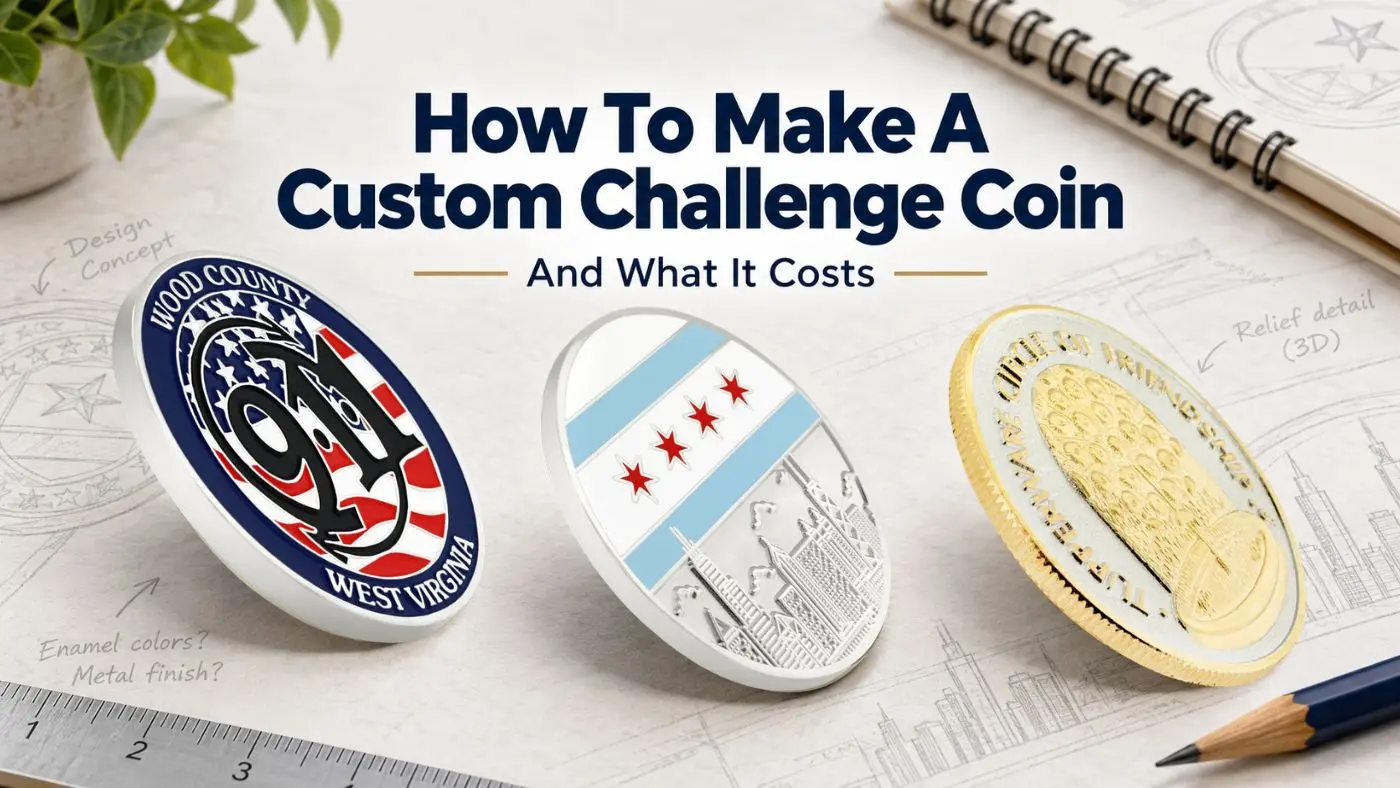
How To Make A Custom Challenge Coin (And What It Costs)
Table of Contents
- What Is a Custom Challenge Coin?
- Step 1: Start With the Purpose
- Step 2: Choose the Right Coin Style
- Step 3: Build the Design
- Step 4: Pick Size, Shape, and Thickness
- Step 5: Select Plating, Color, and Edge Options
- What Do Custom Challenge Coins Cost?
- How To Keep Costs Under Control
- PinMart’s Custom Coin Process
- What To Prepare Before Requesting a Quote
- Final Thoughts: Make It Meaningful First
- FAQs
A custom challenge coin starts with a simple idea: a logo, a milestone, a mission, a unit, a team, or a moment worth remembering. The finished coin may feel like a small piece of metal, but a good one carries real weight. It can recognize service, build pride, celebrate membership, or turn a one-time event into something people actually want to keep.
If you’re wondering how to make a custom challenge coin, the process is easier than it may look. The biggest decisions come down to design, material, size, finish, quantity, and budget. Once those pieces are clear, a custom coin specialist can help turn your idea into production-ready artwork.
What Is a Custom Challenge Coin?
A custom challenge coin is a two-sided medallion designed around a specific group, organization, event, or achievement. Traditionally, challenge coins are closely tied to military and first responder culture. People use them to show affiliation, honor service, commemorate units, and recognize outstanding work.
Today, they go far beyond the military. Businesses use custom challenge coins for employee recognition. Nonprofits use them for donor gifts and campaign keepsakes. Schools, clubs, fire departments, police departments, veteran organizations, and sports teams use them to create a shared symbol people can hold onto.
That is the real appeal. A challenge coin feels official. It is not another flyer, badge, or digital thank-you. It has presence.
Step 1: Start With the Purpose
Before choosing metal, colors, or edge styles, decide what the coin needs to do.
Ask yourself:
- Who is receiving this coin?
- What should it represent?
- Is it formal, commemorative, promotional, or personal?
- Will it be handed out at an event, sold as a fundraiser, or given as an award?
- Does it need to match an existing brand, logo, uniform, or unit insignia?
This step keeps the design focused. A military coin honoring a deployment may need a more traditional, official look. A corporate recognition coin may need a clean logo-forward design. A fundraiser coin might need bold color, a memorable message, and broad visual appeal.
The clearer the purpose, the easier every other choice becomes.
Step 2: Choose the Right Coin Style
Different custom challenge coin styles create different looks and price points.
Die Struck Challenge Coins
Die struck coins are made with raised and recessed metal details. They often have a classic, antique look and work well for seals, emblems, badges, service anniversaries, and formal recognition. If you want a polished, traditional coin without a lot of color, this is a strong option.
Soft Enamel Challenge Coins
Soft enamel challenge coins are one of the most popular choices because they balance detail, color, and dimension. The recessed areas are filled with enamel color, while raised metal lines separate each section. This creates a textured feel that works especially well for logos, mascots, flags, and detailed artwork.
Hard Enamel Challenge Coins
Hard enamel coins have a smoother, more refined finish. The enamel is polished flush with the raised metal, giving the coin a jewelry-like surface. This can be a good fit for premium gifts, executive recognition, anniversary coins, and designs where perceived value matters.
UV Printed and Wood Challenge Coins
For certain designs, printed or wood coins may be a better fit. UV printing can work well for detailed artwork, gradients, photographs, or designs that do not translate easily into separated enamel colors. Wood coins offer a lighter, natural look for events, camps, outdoor brands, and rustic themes.
Step 3: Build the Design
A strong coin design does not need to say everything. In fact, the best challenge coins usually do less, better.
Most coins include some combination of:
- Organization name
- Logo or emblem
- Motto, slogan, or short message
- Date, year, or anniversary
- Location or event name
- Branch, department, or unit details
- Symbolic artwork tied to the group or mission
Because challenge coins are small, space matters. Keep the most important element dominant. If every line of text, icon, and detail fights for attention, the coin can start to feel crowded.
A good rule: design the front around identity and the back around meaning. For example, the front might show a company logo or military unit insignia, while the back includes a motto, date, or commemorative message.
Step 4: Pick Size, Shape, and Thickness
Most challenge coins are round, but they do not have to be. Custom shapes can follow a badge, shield, state outline, product shape, mascot, or logo silhouette.
Size affects both appearance and cost. Larger coins give you more room for artwork, text, and detail, but they also use more material. Smaller coins are easier to carry and can be more budget-friendly, but the design may need to be simplified.
Thickness matters too. A thicker coin feels heavier and more premium. A thinner coin may be more practical for large orders, giveaways, or event distribution.
If the coin needs to feel substantial in the hand, size and thickness are worth discussing early.
Step 5: Select Plating, Color, and Edge Options
The finish is where a custom challenge coin starts to develop its personality.
Common plating options include gold, silver, nickel, copper, bronze, black nickel, or antique finishes. Polished plating creates a bright, clean look. Antique finishes bring out recessed details and give the coin a more traditional or historic feel.
Color choices also matter. Soft enamel and hard enamel coins can include bold enamel colors that match your brand, cause, flag, patch, or event theme. For military, public safety, or corporate coins, color can help the coin feel instantly recognizable.
Edge options add another layer of detail. A standard edge keeps the focus on the artwork. Rope, reeded, beveled, or specialty edges can make the coin feel more finished and collectible.
What Do Custom Challenge Coins Cost?
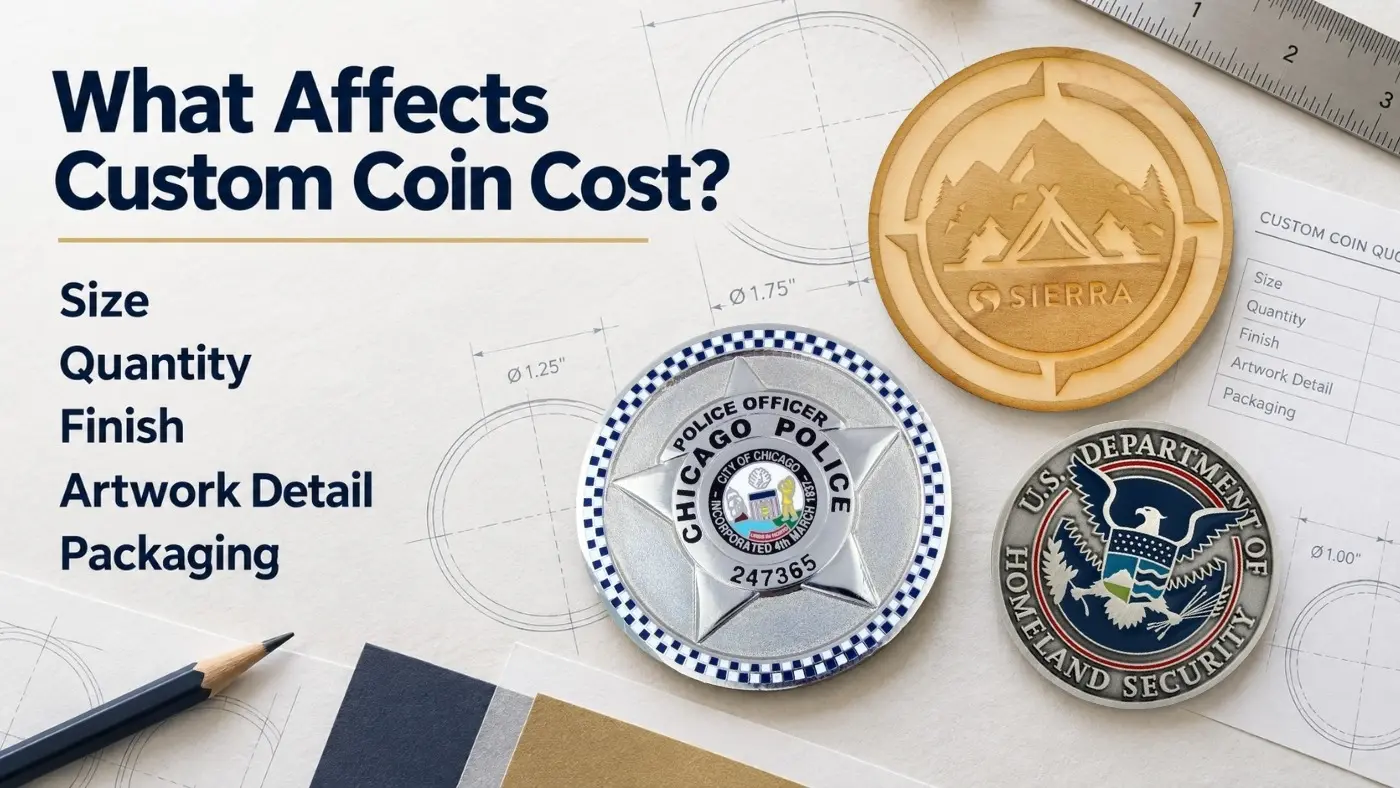
Custom challenge coin cost depends on the choices you make. There is no single price that fits every coin because every project is different.
The biggest cost factors include:
- Quantity ordered
- Coin size
- Coin thickness
- Material and process
- One-sided or two-sided design
- Number of enamel colors
- Plating finish
- Edge style
- Packaging
- Special effects or upgrades
- Production timeline
In general, larger orders lower the cost per coin. That is because setup, artwork, molds, and production planning are spread across more pieces. A small order may have a higher per-coin cost, while a bulk order can bring the unit price down significantly.
PinMart custom challenge coins can cost as little as $1.95 each, depending on the order details. The final quote will depend on your design, size, finish, quantity, and selected options.
How To Keep Costs Under Control
If you are working with a budget, you do not have to strip the coin down until it feels plain. You just need to make smart choices.
Start by prioritizing what matters most. If the coin needs to feel premium, invest in size, weight, and finish. If the coin needs to serve as a large-quantity giveaway, focus on a clean design and efficient production choices.
To help manage cost:
- Order a larger quantity when possible
- Keep the shape simple
- Avoid overcrowding the design
- Use fewer specialty upgrades
- Choose a standard size
- Ask for guidance before finalizing complex artwork
- Be clear about your budget from the beginning
A good custom coin does not need every available option. It needs the right options.
PinMart’s Custom Coin Process
PinMart makes the custom challenge coin process straightforward.
First, choose the custom coin style that fits your project. Then upload your artwork, logo, sketch, or design notes. If your idea is not fully polished yet, that is fine. You do not need to hand over a perfect production file to get started.
From there, PinMart’s team can help prepare custom artwork and a design proof. You review the proof, request changes if needed, and approve the design before production begins. That approval step is important because it gives you a chance to check spelling, layout, colors, details, and overall balance before the coin is made.
For military-related projects, PinMart is also an official licensee of the United States Military, which can be especially helpful for qualifying designs that involve official military logos or unit insignias.
What To Prepare Before Requesting a Quote
You can speed up the quote process by gathering a few details first.
Helpful information includes:
- Desired quantity
- Approximate coin size
- Preferred coin style
- Logo or artwork file
- Text for the front and back
- Plating preference
- Color preferences
- Event date or deadline
- Packaging needs
- Any official brand, unit, or licensing requirements
If you do not know every answer yet, that is normal. A custom specialist can help you narrow the choices. The goal is not to become a coin manufacturing expert overnight. The goal is to explain what you want clearly enough that the design team can guide you.
Final Thoughts: Make It Meaningful First
A custom challenge coin should look good, but it should also mean something.
The best coins are not just decorated metal. They represent a team, a mission, a memory, or a moment of recognition. Whether you are honoring military service, celebrating a company milestone, thanking donors, recognizing employees, or creating a collectible for an event, the design should feel intentional from front to back.
Start with the story. Choose the style that supports it. Then work with a custom coin maker who can help turn that idea into something durable, polished, and worth keeping.
FAQs
How much does it cost to make a custom challenge coin?
Custom challenge coin pricing depends on quantity, size, material, thickness, finish, colors, edge style, and packaging. Larger orders usually lower the cost per coin. PinMart custom challenge coins can cost as little as $1.95 each, depending on the project.
What is the best size for a challenge coin?
The best size depends on the design. Smaller coins are easier to carry and may be more budget-friendly, while larger coins offer more room for artwork and detail. If your design includes a logo, motto, date, and detailed artwork, a larger size may be worth considering.
Can I make a challenge coin without finished artwork?
Yes. You can start with a logo, sketch, reference image, or written idea. PinMart’s team can help create custom artwork and send a proof for review before production.
What should I put on a custom challenge coin?
Common elements include a logo, organization name, motto, event name, date, location, unit insignia, badge, emblem, or short message. Keep the design focused so the most important details are easy to read.
Are challenge coins only for the military?
No. Challenge coins have strong military roots, but they are also used by businesses, nonprofits, schools, clubs, first responders, sports teams, and community organizations.