;%7D .st6%7Bfill-rule:evenodd;clip-rule:evenodd;fill:url(%23SVGID_2_);%7D %3C/style%3E%3Cg%3E%3Cg%3E%3Cpath class='st0' d='M24.4,158.7v28H21V164L12.2,176L3.4,164v22.7H0v-28h3.6l8.6,11.7l8.6-11.7H24.4z'/%3E%3Cpath class='st0' d='M36.8,167.5c2.7,0,5,1,6.9,2.9c1.9,1.9,2.8,4.3,2.8,6.9c0,2.7-0.9,5-2.8,6.9c-1.9,1.9-4.1,2.9-6.9,2.9 c-2.7,0-5-1-6.9-2.9c-1.9-1.9-2.8-4.3-2.8-6.9c0-2.7,0.9-5,2.8-6.9C31.8,168.4,34.1,167.5,36.8,167.5z M32.4,172.5 c-1.2,1.3-1.8,2.9-1.8,4.8c0,1.9,0.6,3.5,1.8,4.8c1.2,1.3,2.7,1.9,4.4,1.9c1.7,0,3.1-0.6,4.4-1.9c1.2-1.3,1.9-2.9,1.9-4.8 c0-1.9-0.6-3.5-1.9-4.8c-1.2-1.3-2.7-1.9-4.4-1.9C35.1,170.6,33.7,171.2,32.4,172.5z'/%3E%3Cpath class='st0' d='M57.1,171.6c-1.5,0.2-2.7,0.9-3.6,1.9c-0.8,1-1.3,2.3-1.3,3.9v9.3h-3.4v-17.8h3.4v2.5 c0.5-1.4,1.6-2.3,3.2-2.9L57.1,171.6z'/%3E%3Cpath class='st0' d='M62.1,177.3L62.1,177.3c0,1.9,0.6,3.5,1.8,4.8c1.2,1.3,2.7,1.9,4.4,1.9c1.7,0,3.1-0.7,4.4-2 c0.2-0.2,0.5-0.6,1-1.2l3.2,1.2c-0.5,0.8-1,1.6-1.6,2.2c-1.9,2-4.2,3-6.9,3c-2.7,0-5-1-6.9-2.9c-1.9-1.9-2.8-4.3-2.8-6.9 c0-2.7,0.9-5,2.8-6.9c1.9-1.9,4.2-2.9,6.9-2.9c2.7,0,5,1,6.9,3c1.6,1.7,2.4,4,2.4,6.8H62.1z M62.7,174.2h11.2 c-0.8-2.4-2.6-3.6-5.6-3.6C65.4,170.6,63.6,171.8,62.7,174.2z'/%3E%3Cpath class='st0' d='M97.5,161.8v24.9h-3.4v-24.9h-6.4v-3h16.2v3H97.5z'/%3E%3Cpath class='st0' d='M105.9,158.7h3.4v10.2c0.6-0.6,1.8-1,3.5-1c2.2,0,3.9,0.7,5.2,2.1c1.3,1.4,2,3,2,5v11.6h-3.4v-11.5 c0-1.2-0.4-2.2-1.2-3c-0.8-0.8-1.7-1.2-2.7-1.2c-1,0-1.9,0.4-2.6,1.1c-0.4,0.5-0.7,0.9-0.9,1.3v13.2h-3.4V158.7z'/%3E%3Cpath class='st0' d='M141.8,186.7h-3.4v-3.1c-1.3,2.4-3.4,3.6-6.1,3.6c-2.7,0-5-1-6.9-2.9c-1.9-1.9-2.8-4.3-2.8-6.9 c0-2.7,0.9-5,2.8-6.9c1.9-1.9,4.2-2.9,6.9-2.9c2.7,0,4.7,1.2,6.1,3.5v-2.1h3.4V186.7z M138.4,178.7v-2.8c-0.2-1.3-0.8-2.4-1.7-3.3 c-1.3-1.3-2.7-2-4.4-2c-1.7,0-3.1,0.6-4.4,1.9c-1.2,1.3-1.8,2.9-1.8,4.8c0,1.9,0.6,3.5,1.8,4.8c1.2,1.3,2.7,1.9,4.4,1.9 c1.7,0,3.1-0.7,4.4-2C137.6,181.1,138.2,180,138.4,178.7z'/%3E%3Cpath class='st0' d='M148.3,173.4v13.2H145v-17.8h3.4c0.6-0.6,1.8-1,3.5-1c2.1,0,3.9,0.7,5.2,2.1c1.3,1.4,2,3,2,5v11.6h-3.4v-11.5 c0-1.2-0.4-2.2-1.2-3c-0.8-0.8-1.7-1.2-2.7-1.2c-1,0-1.9,0.4-2.6,1.1C148.8,172.6,148.5,173,148.3,173.4z'/%3E%3Cpath class='st0' d='M175.1,186.4c0,1.5-0.5,2.8-1.6,3.8c-1,1-2.7,1.6-4.9,1.6v-2.9c1.2,0,2-0.2,2.4-0.6c0.4-0.5,0.7-1.2,0.7-2.1 v-27.5h3.4V186.4z'/%3E%3Cpath class='st0' d='M185.8,186.9c-2.3,0-4-0.7-5.4-2.1c-1.3-1.4-2-3.1-2-5.1v-10.9h3.4v10.8c0,1.2,0.4,2.2,1.2,3 c0.8,0.8,1.7,1.2,2.8,1.2c1,0,1.9-0.4,2.7-1.2c0.8-0.8,1.2-1.8,1.2-3v-10.8h3.4v10.9c0,2-0.7,3.7-2.1,5.1 C189.7,186.2,188,186.9,185.8,186.9z'/%3E%3Cpath class='st0' d='M200.5,177.8c-1.3-0.7-2.1-1.3-2.6-1.8c-0.9-1-1.4-2.1-1.4-3.3c0-1.2,0.4-2.3,1.3-3.3c0.9-0.9,2-1.4,3.4-1.4 s2.4,0.4,3.2,1.3c0.8,0.9,1.3,1.8,1.3,2.9v0.5l-3,1.3c-0.2-1.5-0.4-2.3-0.6-2.6c-0.2-0.3-0.5-0.4-0.8-0.4c-0.3,0-0.6,0.2-0.9,0.4 c-0.3,0.3-0.4,0.7-0.4,1.2c0,0.5,0.2,0.9,0.5,1.2c0.2,0.2,0.7,0.6,1.5,1.1c1.4,0.8,2.4,1.5,3.1,2.2c1,1.1,1.5,2.4,1.5,3.8 c0,1.5-0.5,2.8-1.6,3.9c-1.1,1.1-2.4,1.7-4,1.7c-1.6,0-2.9-0.6-4-1.7c-1.1-1.1-1.6-2.5-1.6-4.2l3.4-0.9c0,1.5,0.2,2.5,0.7,3 c0.5,0.5,1,0.7,1.5,0.7c0.6,0,1.1-0.2,1.5-0.7c0.5-0.5,0.7-1.1,0.7-1.9c0-0.7-0.2-1.4-0.7-1.9 C202.1,178.9,201.5,178.5,200.5,177.8z'/%3E%3Cpath class='st0' d='M211.3,168.9V162h3.4v6.9h3.2v3h-3.2v14.7h-3.4V172h-3.2v-3H211.3z'/%3E%3Cpath class='st0' d='M232.7,177.5v9.2h-3.4v-28h7.7c2.2,0.3,4.1,1.3,5.6,2.8c1.8,1.8,2.6,4,2.6,6.5c0,2.6-0.9,4.8-2.7,6.6 c-1.8,1.9-4,2.8-6.6,2.8H232.7z M232.7,161.8v12.7h3.3c1.6,0,2.9-0.6,4.1-1.8c1.2-1.2,1.8-2.7,1.8-4.5c0-1.8-0.6-3.3-1.8-4.5 c-1.2-1.2-2.5-1.8-4.1-1.8H232.7z'/%3E%3Cpath class='st0' d='M251,163.9c0.5,0.5,0.7,1,0.7,1.5c0,0.6-0.2,1.1-0.7,1.6c-0.5,0.5-1,0.7-1.7,0.7c-0.7,0-1.3-0.2-1.7-0.7 c-0.4-0.5-0.7-1-0.7-1.6c0-0.6,0.2-1.1,0.7-1.5c0.4-0.5,1-0.7,1.7-0.7C250,163.2,250.6,163.4,251,163.9z M251,168.9v17.8h-3.4 v-17.8H251z'/%3E%3Cpath class='st0' d='M258.1,173.4v13.2h-3.4v-17.8h3.4c0.6-0.6,1.8-1,3.5-1c2.1,0,3.9,0.7,5.2,2.1c1.3,1.4,2,3,2,5v11.6h-3.4 v-11.5c0-1.2-0.4-2.2-1.2-3c-0.8-0.8-1.7-1.2-2.7-1.2c-1,0-1.9,0.4-2.6,1.1C258.5,172.6,258.2,173,258.1,173.4z'/%3E%3Cpath class='st0' d='M276.5,177.8c-1.3-0.7-2.1-1.3-2.6-1.8c-0.9-1-1.4-2.1-1.4-3.3c0-1.2,0.4-2.3,1.3-3.3c0.9-0.9,2-1.4,3.4-1.4 c1.3,0,2.4,0.4,3.2,1.3c0.8,0.9,1.3,1.8,1.3,2.9v0.5l-3,1.3c-0.2-1.5-0.4-2.3-0.6-2.6c-0.2-0.3-0.5-0.4-0.8-0.4 c-0.3,0-0.6,0.2-0.9,0.4c-0.3,0.3-0.4,0.7-0.4,1.2c0,0.5,0.2,0.9,0.5,1.2c0.2,0.2,0.7,0.6,1.5,1.1c1.4,0.8,2.4,1.5,3.1,2.2 c1,1.1,1.5,2.4,1.5,3.8c0,1.5-0.5,2.8-1.6,3.9c-1.1,1.1-2.4,1.7-4,1.7s-2.9-0.6-4-1.7c-1.1-1.1-1.6-2.5-1.6-4.2l3.4-0.9 c0,1.5,0.2,2.5,0.7,3c0.5,0.5,1,0.7,1.5,0.7c0.6,0,1.1-0.2,1.5-0.7c0.5-0.5,0.7-1.1,0.7-1.9c0-0.7-0.2-1.4-0.7-1.9 C278.1,178.9,277.5,178.5,276.5,177.8z'/%3E%3Cpath class='st0' d='M287.3,183.1c0.5,0.5,0.7,1,0.7,1.6c0,0.6-0.2,1.1-0.7,1.6c-0.5,0.5-1,0.7-1.7,0.7c-0.7,0-1.3-0.2-1.7-0.7 c-0.4-0.5-0.7-1-0.7-1.6c0-0.6,0.2-1.1,0.7-1.6c0.4-0.5,1-0.7,1.7-0.7C286.3,182.4,286.8,182.6,287.3,183.1z'/%3E%3Cpath class='st0' d='M293.8,183.1c0.5,0.5,0.7,1,0.7,1.6c0,0.6-0.2,1.1-0.7,1.6c-0.5,0.5-1,0.7-1.7,0.7c-0.7,0-1.3-0.2-1.7-0.7 c-0.4-0.5-0.7-1-0.7-1.6c0-0.6,0.2-1.1,0.7-1.6c0.4-0.5,1-0.7,1.7-0.7C292.8,182.4,293.3,182.6,293.8,183.1z'/%3E%3Cpath class='st0' d='M300.3,183.1c0.5,0.5,0.7,1,0.7,1.6c0,0.6-0.2,1.1-0.7,1.6c-0.5,0.5-1,0.7-1.7,0.7c-0.7,0-1.3-0.2-1.7-0.7 c-0.4-0.5-0.7-1-0.7-1.6c0-0.6,0.2-1.1,0.7-1.6c0.4-0.5,1-0.7,1.7-0.7C299.3,182.4,299.8,182.6,300.3,183.1z'/%3E%3Cpath class='st0' d='M319.4,177.5h-3.2v9.2h-3.4v-28h7.7c2.2,0.3,4.1,1.3,5.6,2.8c1.8,1.8,2.6,4,2.6,6.5c0,2.6-0.9,4.8-2.7,6.6 c-1.2,1.3-2.2,2-3.2,2.2l6,9.7h-3.9L319.4,177.5z M316.3,161.8v12.7h3.3c1.6,0,2.9-0.6,4.1-1.8c1.2-1.2,1.8-2.7,1.8-4.5 c0-1.8-0.6-3.3-1.8-4.5c-1.2-1.2-2.5-1.8-4.1-1.8H316.3z'/%3E%3Cpath class='st0' d='M333.6,177.3L333.6,177.3c0,1.9,0.6,3.5,1.8,4.8c1.2,1.3,2.7,1.9,4.4,1.9c1.7,0,3.1-0.7,4.4-2 c0.2-0.2,0.5-0.6,1-1.2l3.2,1.2c-0.5,0.8-1,1.6-1.6,2.2c-1.9,2-4.2,3-6.9,3c-2.7,0-5-1-6.9-2.9c-1.9-1.9-2.8-4.3-2.8-6.9 c0-2.7,0.9-5,2.8-6.9c1.9-1.9,4.2-2.9,6.9-2.9c2.7,0,5,1,6.9,3c1.6,1.7,2.4,4,2.4,6.8H333.6z M334.2,174.2h11.2 c-0.8-2.4-2.6-3.6-5.6-3.6C336.9,170.6,335,171.8,334.2,174.2z'/%3E%3Cpath class='st0' d='M365.4,181l3.2,1.2c-0.6,0.9-1.1,1.5-1.5,1.9c-1.9,2-4.2,3-6.9,3c-2.7,0-5-1-6.9-2.9 c-1.9-1.9-2.8-4.3-2.8-6.9c0-2.7,0.9-5,2.8-6.9c1.9-1.9,4.2-2.9,6.9-2.9c2.7,0,5,1,6.8,2.9c0.4,0.4,1,1.1,1.6,2l-3.2,1.2 c-0.4-0.6-0.8-1-0.9-1.1c-1.2-1.2-2.6-1.9-4.3-1.9c-1.7,0-3.1,0.6-4.3,1.9c-1.2,1.3-1.8,2.9-1.8,4.8c0,1.9,0.6,3.5,1.8,4.8 c1.2,1.3,2.7,1.9,4.3,1.9c1.7,0,3.1-0.7,4.4-2C364.6,181.9,364.9,181.6,365.4,181z'/%3E%3Cpath class='st0' d='M380.2,167.5c2.7,0,5,1,6.9,2.9c1.9,1.9,2.8,4.3,2.8,6.9c0,2.7-0.9,5-2.8,6.9c-1.9,1.9-4.1,2.9-6.9,2.9 c-2.7,0-5-1-6.8-2.9c-1.9-1.9-2.8-4.3-2.8-6.9c0-2.7,0.9-5,2.8-6.9C375.2,168.4,377.5,167.5,380.2,167.5z M375.8,172.5 c-1.2,1.3-1.8,2.9-1.8,4.8c0,1.9,0.6,3.5,1.8,4.8c1.2,1.3,2.7,1.9,4.4,1.9c1.7,0,3.1-0.6,4.4-1.9c1.2-1.3,1.9-2.9,1.9-4.8 c0-1.9-0.6-3.5-1.9-4.8c-1.2-1.3-2.7-1.9-4.4-1.9C378.5,170.6,377.1,171.2,375.8,172.5z'/%3E%3Cpath class='st0' d='M407.3,183.7c-1.2,2.3-3.1,3.5-5.8,3.5c-2.7,0-5-1-6.9-2.9c-1.9-1.9-2.8-4.3-2.8-6.9c0-2.7,0.9-5,2.8-6.9 c1.9-1.9,4.2-2.9,6.9-2.9c2.7,0,4.7,1.2,6.1,3.5v-2.1h3.4v13.4c0,2.6-0.9,4.8-2.7,6.7c-1.9,2-4.2,3-6.9,3c-2.7,0-5-1-6.8-2.9 c-0.4-0.5-1-1.1-1.6-2l3.2-1.2c0.4,0.6,0.7,0.9,0.9,1.1c1.2,1.3,2.6,1.9,4.3,1.9C404.8,188.8,406.8,187.1,407.3,183.7z M407.5,175.8c-0.2-1.3-0.8-2.4-1.8-3.3c-1.2-1.3-2.6-1.9-4.3-1.9c-1.7,0-3.1,0.6-4.4,1.9c-1.2,1.3-1.8,2.9-1.8,4.8 c0,1.9,0.6,3.5,1.8,4.8c1.2,1.3,2.7,1.9,4.4,1.9c1.7,0,3.1-0.7,4.4-2c0.9-0.9,1.4-2,1.7-3.2V175.8z'/%3E%3Cpath class='st0' d='M417.1,173.4v13.2h-3.4v-17.8h3.4c0.6-0.6,1.8-1,3.5-1c2.1,0,3.9,0.7,5.2,2.1c1.3,1.4,2,3,2,5v11.6h-3.4 v-11.5c0-1.2-0.4-2.2-1.2-3c-0.8-0.8-1.7-1.2-2.7-1.2c-1,0-1.9,0.4-2.6,1.1C417.6,172.6,417.3,173,417.1,173.4z'/%3E%3Cpath class='st0' d='M435,163.9c0.5,0.5,0.7,1,0.7,1.5c0,0.6-0.2,1.1-0.7,1.6c-0.5,0.5-1,0.7-1.7,0.7c-0.7,0-1.3-0.2-1.7-0.7 c-0.5-0.5-0.7-1-0.7-1.6c0-0.6,0.2-1.1,0.7-1.5c0.4-0.5,1-0.7,1.7-0.7C434,163.2,434.5,163.4,435,163.9z M434.9,168.9v17.8h-3.4 v-17.8H434.9z'/%3E%3Cpath class='st0' d='M446,172.2h-7.5v-3h12.9l-8,14.5h8.1v3H438L446,172.2z'/%3E%3Cpath class='st0' d='M456.7,177.3L456.7,177.3c0,1.9,0.6,3.5,1.8,4.8c1.2,1.3,2.7,1.9,4.4,1.9c1.7,0,3.1-0.7,4.4-2 c0.2-0.2,0.5-0.6,1-1.2l3.2,1.2c-0.5,0.8-1,1.6-1.6,2.2c-1.9,2-4.2,3-6.9,3c-2.7,0-5-1-6.9-2.9c-1.9-1.9-2.8-4.3-2.8-6.9 c0-2.7,0.9-5,2.8-6.9c1.9-1.9,4.2-2.9,6.9-2.9c2.7,0,5,1,6.9,3c1.6,1.7,2.4,4,2.4,6.8H456.7z M457.3,174.2h11.2 c-0.8-2.4-2.7-3.6-5.6-3.6C460,170.6,458.1,171.8,457.3,174.2z'/%3E%3Cpath class='st0' d='M478.1,182.4l-3.7,7.9h-3.2l2-7.9H478.1z'/%3E%3Cpath class='st0' d='M494.3,158.7v28H491v-28H494.3z'/%3E%3Cpath class='st0' d='M501.5,173.4v13.2h-3.4v-17.8h3.4c0.6-0.6,1.8-1,3.5-1c2.1,0,3.9,0.7,5.2,2.1c1.3,1.4,2,3,2,5v11.6h-3.4 v-11.5c0-1.2-0.4-2.2-1.2-3c-0.8-0.8-1.7-1.2-2.7-1.2c-1,0-1.9,0.4-2.6,1.1C502,172.6,501.7,173,501.5,173.4z'/%3E%3Cpath class='st0' d='M520,177.8c-1.3-0.7-2.1-1.3-2.6-1.8c-0.9-1-1.4-2.1-1.4-3.3c0-1.2,0.4-2.3,1.3-3.3c0.9-0.9,2-1.4,3.4-1.4 c1.3,0,2.4,0.4,3.2,1.3c0.8,0.9,1.3,1.8,1.3,2.9v0.5l-3,1.3c-0.2-1.5-0.4-2.3-0.6-2.6c-0.2-0.3-0.5-0.4-0.9-0.4 c-0.3,0-0.6,0.2-0.9,0.4c-0.3,0.3-0.4,0.7-0.4,1.2c0,0.5,0.2,0.9,0.5,1.2c0.2,0.2,0.7,0.6,1.5,1.1c1.4,0.8,2.4,1.5,3.1,2.2 c1,1.1,1.5,2.4,1.5,3.8c0,1.5-0.5,2.8-1.6,3.9c-1.1,1.1-2.4,1.7-4,1.7c-1.6,0-2.9-0.6-4-1.7c-1.1-1.1-1.6-2.5-1.6-4.2l3.4-0.9 c0,1.5,0.2,2.5,0.7,3c0.5,0.5,1,0.7,1.5,0.7c0.6,0,1.1-0.2,1.5-0.7c0.5-0.5,0.7-1.1,0.7-1.9c0-0.7-0.2-1.4-0.7-1.9 C521.6,178.9,520.9,178.5,520,177.8z'/%3E%3Cpath class='st0' d='M528.7,168.9h3.4v2c1.3-2.3,3.4-3.5,6.1-3.5c2.7,0,5,1,6.9,2.9c1.9,1.9,2.8,4.2,2.8,6.9c0,2.7-0.9,5-2.8,6.9 c-1.9,1.9-4.2,2.9-6.9,2.9c-2.7,0-4.7-1.2-6.1-3.5v9.2h-3.4V168.9z M532.1,175.8v3c0.2,1.3,0.8,2.4,1.7,3.3 c1.2,1.3,2.7,1.9,4.3,1.9c1.7,0,3.1-0.6,4.4-1.9c1.2-1.3,1.9-2.9,1.9-4.8c0-1.9-0.6-3.5-1.9-4.8c-1.2-1.3-2.7-1.9-4.4-1.9 c-1.7,0-3.1,0.7-4.4,2C532.8,173.5,532.3,174.6,532.1,175.8z'/%3E%3Cpath class='st0' d='M554.1,163.9c0.5,0.5,0.7,1,0.7,1.5c0,0.6-0.2,1.1-0.7,1.6c-0.5,0.5-1,0.7-1.7,0.7c-0.7,0-1.3-0.2-1.7-0.7 c-0.5-0.5-0.7-1-0.7-1.6c0-0.6,0.2-1.1,0.7-1.5c0.4-0.5,1-0.7,1.7-0.7C553.1,163.2,553.7,163.4,554.1,163.9z M554.1,168.9v17.8 h-3.4v-17.8H554.1z'/%3E%3Cpath class='st0' d='M565.6,171.6c-1.5,0.2-2.7,0.9-3.6,1.9c-0.8,1-1.3,2.3-1.3,3.9v9.3h-3.4v-17.8h3.4v2.5 c0.5-1.4,1.6-2.3,3.2-2.9L565.6,171.6z'/%3E%3Cpath class='st0' d='M570.7,177.3L570.7,177.3c0,1.9,0.6,3.5,1.8,4.8c1.2,1.3,2.7,1.9,4.4,1.9c1.7,0,3.1-0.7,4.4-2 c0.2-0.2,0.5-0.6,1-1.2l3.2,1.2c-0.5,0.8-1,1.6-1.6,2.2c-1.9,2-4.2,3-6.9,3c-2.7,0-5-1-6.9-2.9c-1.9-1.9-2.8-4.3-2.8-6.9 c0-2.7,0.9-5,2.8-6.9c1.9-1.9,4.2-2.9,6.9-2.9c2.7,0,5,1,6.9,3c1.6,1.7,2.4,4,2.4,6.8H570.7z M571.3,174.2h11.2 c-0.8-2.4-2.7-3.6-5.6-3.6C573.9,170.6,572.1,171.8,571.3,174.2z'/%3E%3Cpath class='st0' d='M592,182.4l-3.7,7.9h-3.2l2-7.9H592z'/%3E%3Cpath class='st0' d='M608.1,177.5v9.2h-3.4v-28h7.7c2.2,0.3,4.1,1.3,5.6,2.8c1.8,1.8,2.6,4,2.6,6.5c0,2.6-0.9,4.8-2.7,6.6 c-1.8,1.9-4,2.8-6.6,2.8H608.1z M608.1,161.8v12.7h3.3c1.6,0,2.9-0.6,4.1-1.8c1.2-1.2,1.8-2.7,1.8-4.5c0-1.8-0.6-3.3-1.8-4.5 c-1.2-1.2-2.5-1.8-4.1-1.8H608.1z'/%3E%3Cpath class='st0' d='M630.5,171.6c-1.5,0.2-2.7,0.9-3.6,1.9c-0.8,1-1.3,2.3-1.3,3.9v9.3h-3.4v-17.8h3.4v2.5 c0.5-1.4,1.6-2.3,3.2-2.9L630.5,171.6z'/%3E%3Cpath class='st0' d='M642.1,167.5c2.7,0,5,1,6.9,2.9c1.9,1.9,2.8,4.3,2.8,6.9c0,2.7-0.9,5-2.8,6.9c-1.8,1.9-4.1,2.9-6.9,2.9 c-2.7,0-5-1-6.9-2.9c-1.9-1.9-2.8-4.3-2.8-6.9c0-2.7,0.9-5,2.8-6.9C637.2,168.4,639.4,167.5,642.1,167.5z M637.8,172.5 c-1.2,1.3-1.8,2.9-1.8,4.8c0,1.9,0.6,3.5,1.8,4.8c1.2,1.3,2.7,1.9,4.4,1.9c1.7,0,3.1-0.6,4.4-1.9c1.2-1.3,1.9-2.9,1.9-4.8 c0-1.9-0.6-3.5-1.9-4.8c-1.2-1.3-2.7-1.9-4.4-1.9C640.5,170.6,639,171.2,637.8,172.5z'/%3E%3Cpath class='st0' d='M658,172.1v14.6h-3.4v-17.8h2.1c0.9-0.6,2.1-1,3.4-1c1.6,0,2.9,0.4,3.9,1.2c1-0.8,2.3-1.2,3.9-1.2 c1.6,0,2.9,0.6,4,1.7c1,1.1,1.5,2.3,1.6,3.7v13.3h-3.4v-14.1c-0.2-1.1-0.9-1.6-2.2-1.6c-1.1,0-1.8,0.5-2.3,1.5v14.2h-3.4v-14.1h0 c-0.1-1.1-0.9-1.6-2.2-1.6C659.3,171,658.5,171.4,658,172.1z'/%3E%3Cpath class='st0' d='M686.1,167.5c2.7,0,5,1,6.9,2.9c1.9,1.9,2.8,4.3,2.8,6.9c0,2.7-0.9,5-2.8,6.9c-1.9,1.9-4.1,2.9-6.9,2.9 c-2.7,0-5-1-6.9-2.9c-1.9-1.9-2.8-4.3-2.8-6.9c0-2.7,0.9-5,2.8-6.9C681.1,168.4,683.4,167.5,686.1,167.5z M681.7,172.5 c-1.2,1.3-1.8,2.9-1.8,4.8c0,1.9,0.6,3.5,1.8,4.8c1.2,1.3,2.7,1.9,4.4,1.9c1.7,0,3.1-0.6,4.4-1.9c1.2-1.3,1.9-2.9,1.9-4.8 c0-1.9-0.6-3.5-1.9-4.8c-1.2-1.3-2.7-1.9-4.4-1.9C684.4,170.6,682.9,171.2,681.7,172.5z'/%3E%3Cpath class='st0' d='M700.5,168.9V162h3.4v6.9h3.2v3h-3.2v14.7h-3.4V172h-3.2v-3H700.5z'/%3E%3Cpath class='st0' d='M711.7,177.3L711.7,177.3c0,1.9,0.6,3.5,1.8,4.8c1.2,1.3,2.7,1.9,4.4,1.9c1.7,0,3.1-0.7,4.4-2 c0.2-0.2,0.5-0.6,1-1.2l3.2,1.2c-0.5,0.8-1,1.6-1.6,2.2c-1.9,2-4.2,3-6.9,3c-2.7,0-5-1-6.9-2.9c-1.9-1.9-2.8-4.3-2.8-6.9 c0-2.7,0.9-5,2.8-6.9c1.9-1.9,4.2-2.9,6.9-2.9c2.7,0,5,1,6.9,3c1.6,1.7,2.4,4,2.4,6.8H711.7z M712.3,174.2h11.2 c-0.8-2.4-2.6-3.6-5.6-3.6C715,170.6,713.1,171.8,712.3,174.2z'/%3E%3C/g%3E%3C/g%3E%3Cpath class='st1' d='M604.8,122.7c-8,0.1-9.1-2-12.6-6.1c-3.2-3.9-4.8-9.8-4.9-17.9l0-24.1h13.9L601,56.3h-13.9L587,30.2h-19.1 l0.1,26.1h-11.6l0.2,18.3h11.6l0,24.1c0.1,13.6,3.6,24.1,10.7,31.4c7,7.3,12.7,11,26.2,11L604.8,122.7z'/%3E%3Cpath class='st1' d='M103.1,13C65.8-10.3,3.1,4.8,3.1,4.8l0.4,133.9h25.2l-0.3-55h39.7c14.7,0,26.6-2.8,35.4-8.5 c10.3-6.5,17.9-16.9,17.9-31.1C121.4,30.1,113.6,19.7,103.1,13z M92.5,46.5c-0.7,6.1-2.1,8.5-6.3,11.8c-3.7,2.9-13.8,5.4-19.6,5.5 H29l-0.4-39.7c0,0,38.3-10.8,57.2,5.1C91.2,34.4,93.2,40.5,92.5,46.5z'/%3E%3Cpolygon class='st1' points='133.4,139.4 155.3,139.4 155.4,69.3 133.4,69.3 '/%3E%3Cpath class='st1' d='M248.5,64.7c-6.8-8.5-21-9.8-31.2-9.8c-8.7,0-16.3,3.7-21.2,6.6l-0.3-6.6h-22.1l0.4,84.3l19.4,0V93.3 c0.3-15.2,9.9-21.3,23.3-21.4c10.4-0.1,18.3,5.6,18.1,20.7c0,0,0,19.2,0,46.7c13.3,0,17.3-0.2,18.5,0c-0.5-13.3,0.3-26.6,0.2-39.9 c-0.1-10.3,1.6-22-3.1-31.6C250,66.7,249.3,65.7,248.5,64.7z'/%3E%3Cpath class='st1' d='M460.6,60c-4.9-3.1-11.6-4.6-20.3-4.6c-13.5,0-23.8,3.9-31.1,11.8c-6.9,7.4-10.5,17.5-10.6,30.4 c0,12.8,3.3,22.9,10.1,30.4c7.2,7.8,17.6,11.8,31.1,11.8c8.6,0,15.5-1.5,20.5-4.6l-0.1,4.6h21.6l0.1-84.3h-21L460.6,60z M440.8,124.1c-12.3,0-18.7-8.8-19-26.3c-0.5-17.6,5.4-26.5,17.7-26.5c12.4,0,18.8,8.8,19.2,26.5 C459.1,115.3,453.2,124.1,440.8,124.1z'/%3E%3Cpath class='st1' d='M520.3,55.5h-20.9l-0.1,84.3h20.9L520,97.6c0.1-8.1,1.9-14.2,5.5-18.2c3.5-4,9.6-6,18.4-6l0.1-18 c-11.1,0-19,1.5-23.8,4.6L520.3,55.5z'/%3E%3Cpolygon class='st1' points='368.2,37 328.2,106.7 291.7,37 273.1,37 272.8,139.6 292.8,139.6 293,81.4 320.6,130.5 337.5,130.5 366.7,81.4 366.9,139.9 385.7,139.9 385,37 '/%3E%3Cg%3E%3Cg%3E%3Cg class='st2'%3E%3Cpath class='st3' d='M617.3,60.7l40.6-6l9.9-39.8l17.6,35.5c13.5-3.9,42.7-27.6,43-27.8l2,1.7c-3.4,5.9-12,14-18.1,19.4 c16.9-8.6,40.2-26.8,40.5-27l1.9,1.9c-38,44.1-99.4,64.6-100.1,64.8l-0.6,0.2L617.3,60.7z'/%3E%3C/g%3E%3Cg%3E%3Cpath class='st4' d='M615.3,60.7l40.6-6l9.9-39.8l17.6,35.5c13.5-3.9,42.7-27.6,43-27.8l2,1.7c-3.4,5.9-12,14-18.1,19.4 c16.9-8.6,40.2-26.8,40.4-27l1.9,1.9c-38,44.1-99.4,64.6-100.1,64.8l-0.6,0.2L615.3,60.7z'/%3E%3C/g%3E%3C/g%3E%3Cpath class='st4' d='M650.6,82.4l0.9-0.2c0.3-0.1,35-7.8,75.6-35.3l1.7,2.1c-0.2,0.2-19.8,18.4-33,28.6l15.1,38l-36.2-19.2 L643,123.2L650.6,82.4z'/%3E%3Cg%3E%3Cg class='st2'%3E%3Cpath class='st3' d='M667.1,17.3l-9.3,37.1L619.9,60l33,20.7c0,0,61.3-20,99.5-64.4c0,0-32.6,25.6-49.1,30.8 c0,0,19.4-15.4,24.8-24.9c0,0-31,25.3-44.5,28.4L667.1,17.3z'/%3E%3C/g%3E%3Cg%3E%3ClinearGradient id='SVGID_1_' gradientUnits='userSpaceOnUse' x1='617.8706' y1='48.4526' x2='750.3667' y2='48.4526'%3E%3Cstop offset='0' style='stop-color:%23C0B8B1'/%3E%3Cstop offset='3.734726e-02' style='stop-color:%23CEC6C0'/%3E%3Cstop offset='0.1207' style='stop-color:%23E6E2DF'/%3E%3Cstop offset='0.1974' style='stop-color:%23F6F3F3'/%3E%3Cstop offset='0.2606' style='stop-color:%23FBFAFA'/%3E%3Cstop offset='0.3054' style='stop-color:%23F5F2F2'/%3E%3Cstop offset='0.3653' style='stop-color:%23E3DFDB'/%3E%3Cstop offset='0.4335' style='stop-color:%23C7BFB9'/%3E%3Cstop offset='0.4485' style='stop-color:%23C0B8B1'/%3E%3Cstop offset='0.5818' style='stop-color:%23C0B8B1'/%3E%3Cstop offset='0.6238' style='stop-color:%23D1C9C3'/%3E%3Cstop offset='0.6975' style='stop-color:%23E7E2DF'/%3E%3Cstop offset='0.7678' style='stop-color:%23F5F2F1'/%3E%3Cstop offset='0.8303' style='stop-color:%23FAF7F8'/%3E%3Cstop offset='1' style='stop-color:%23C1B9B2'/%3E%3C/linearGradient%3E%3Cpath class='st5' d='M665,17.3l-9.3,37.1L617.9,60l33,20.7c0,0,61.3-20,99.5-64.4c0,0-32.6,25.6-49.1,30.8 c0,0,19.4-15.4,24.8-24.9c0,0-31,25.3-44.5,28.4L665,17.3z'/%3E%3C/g%3E%3C/g%3E%3Cg%3E%3Cg class='st2'%3E%3Cpath class='st3' d='M728.6,46.5c0,0-20.4,19-33.7,29.1l14.1,35.6l-33.7-17.9l-29.5,24.8l6.8-36.1 C652.6,82,687.4,74.5,728.6,46.5z'/%3E%3C/g%3E%3Cg%3E%3ClinearGradient id='SVGID_2_' gradientUnits='userSpaceOnUse' x1='643.7504' y1='82.3176' x2='726.6069' y2='82.3176'%3E%3Cstop offset='0' style='stop-color:%23C0B8B1'/%3E%3Cstop offset='3.734726e-02' style='stop-color:%23CEC6C0'/%3E%3Cstop offset='0.1207' style='stop-color:%23E6E2DF'/%3E%3Cstop offset='0.1974' style='stop-color:%23F6F3F3'/%3E%3Cstop offset='0.2606' style='stop-color:%23FBFAFA'/%3E%3Cstop offset='0.3054' style='stop-color:%23F5F2F2'/%3E%3Cstop offset='0.3653' style='stop-color:%23E3DFDB'/%3E%3Cstop offset='0.4335' style='stop-color:%23C7BFB9'/%3E%3Cstop offset='0.4485' style='stop-color:%23C0B8B1'/%3E%3Cstop offset='0.5818' style='stop-color:%23C0B8B1'/%3E%3Cstop offset='0.6238' style='stop-color:%23D1C9C3'/%3E%3Cstop offset='0.6975' style='stop-color:%23E7E2DF'/%3E%3Cstop offset='0.7678' style='stop-color:%23F5F2F1'/%3E%3Cstop offset='0.8303' style='stop-color:%23FAF7F8'/%3E%3Cstop offset='1' style='stop-color:%23C1B9B2'/%3E%3C/linearGradient%3E%3Cpath class='st6' d='M726.6,46.5c0,0-20.4,19-33.7,29.1l14.1,35.6l-33.7-17.9l-29.5,24.8l6.8-36.1 C650.5,82,685.3,74.5,726.6,46.5z'/%3E%3C/g%3E%3C/g%3E%3C/g%3E%3Crect x='133.5' y='40.7' class='st1' width='22' height='19'/%3E%3C/svg%3E)

Veterans Day Uses For Challenge Coins, Pins, and Dog Tags
Table of Contents
Veterans Day Traditions and the Meaning of Challenge Coins, Pins, and Dog Tags
Every November 11, we observe Veterans Day by thanking those who have served in the U.S. Armed Forces. At ceremonies, reunions, and community gatherings, three small objects can play distinct roles. A challenge coin can recognize an individual contribution or mark a gathering. A lapel pin can show branch affiliation or visible support. Military dog tags began as identification, and original tags can now help illustrate what service members carried and why.
What Veterans Day Recognizes
Veterans Day honors Americans who served honorably in wartime or peacetime, with a particular emphasis on thanking living veterans. November 11 marks the date the World War I armistice took effect in 1918. Originally observed as Armistice Day, the holiday took its current name in 1954, broadening its focus beyond those who served in World War I. VA history of Veterans Day
| Item | What it represents | How it can be used on Veterans Day |
|---|---|---|
| Challenge coin | A unit, achievement, or occasion | Presented during a recognition ceremony or given to attendees as a reunion memento |
| Lapel pin | Military affiliation, recognition, or public support, depending on the design | Worn by a veteran or supporter, or presented to eligible honorees |
| Dog tags | Identification in military service | Displayed as original artifacts or represented by clearly labeled replicas or tribute tags |
Challenge Coins: Recognize Contributions and Mark Occasions
In the military, leaders can present a challenge coin to acknowledge someone’s work. The coin might carry the unit’s insignia, a commander’s title, or a motto. Those details help identify who presented it and what organization it represents. A coin can also recognize a contribution that might otherwise pass quietly, such as stepping in to solve a problem during an exercise or doing exceptional work behind the scenes.
The command coin at Fort Hunter Liggett shows how much information can fit on two sides. One side identifies the presenting leaders and features a helicopter and a tule elk. The other carries the garrison name and the emblems of its major directorates. Even when the coin is displayed years later, those details connect the recognition to a particular command and place.
That tradition can inform a Veterans Day presentation. If a veterans organization recognizes a member for organizing peer support or mentoring younger veterans, the presenter can name that contribution when handing over the coin. The words spoken at the presentation make clear why that person is being recognized.
A commemorative coin can serve a different purpose. At a reunion or a community Veterans Day program, a coin bearing the event name and date can be shared as a record of the gathering. The program can explain whether a coin recognizes individual service, ongoing work with a veterans group, or participation in the event. An event name or a phrase of thanks can make that purpose clear even after the gathering is over.

Soldier's Prayer Challenge Coin
Presenting or Displaying a Challenge Coin
For an individual presentation, introduce the recipient and say what the coin recognizes. In a display of military coins, a caption can identify the unit, the presenter, or the occasion when those details are known. A short caption helps visitors understand the difference between a commander’s coin and a coin made to commemorate a reunion.
Lapel Pins Make Recognition Visible
A lapel pin can be worn throughout a Veterans Day event. A veteran may choose a branch or unit pin that reflects their service. A civilian attendee may wear a flag pin or a pin with a general message of appreciation. The design matters because each pin communicates something different to the people who see it.
Pins can also be presented to a specific group of veterans. For a recognition event in Butler, Pennsylvania, the VA announced that Vietnam veterans attending would receive a Vietnam War Commemoration lapel pin. The pin identified the service the event was organized to acknowledge, and recipients could wear it again at future observances.
The Vietnam Veteran Lapel Pin illustrates how a design can communicate its purpose at a glance. The eagle sits between the words “Vietnam War” and “Veteran,” so someone seeing the pin on a jacket can identify the group it recognizes. At a public event, a presenter can explain the design's significance before handing out the pins.

Choosing a Pin for a Veterans Day Event
A school, workplace, or civic group can offer a general appreciation pin to attendees or present a distinct commemorative pin to the veterans being recognized. If a pin is meant for a particular branch or group, confirm who it represents before presenting it. Give recipients the choice to put it on during the event or take it home.
At a public gathering, a short line in the program can explain who is being recognized and why a particular pin was chosen. That gives people who are unfamiliar with the emblem a way to understand what it represents.
Dog Tags Explain a Practical Part of Military Service
Military-issued dog tags are personal identification tags. The U.S. Army made them mandatory in 1913. In World War I, soldiers wore round identification discs. If a soldier died in battle, one tag stayed with the soldier while the other could be forwarded for identification and recordkeeping. By World War II, the Army had adopted the familiar oblong shape.
The change in shape offers a simple way to teach the history. Show an image of the round discs next to an example of the later oblong tags and ask visitors what both objects had to do. Each needed to carry identifying information in a compact form that could stay with a service member in the field.
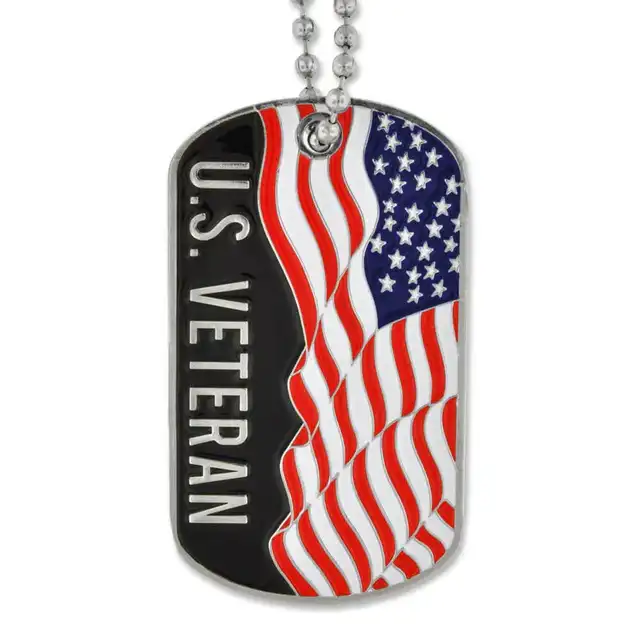
Using Dog Tags in an Educational or Commemorative Display
At a Veterans Day exhibit, original tags can sit alongside a uniform, service photograph, or other issued equipment. A caption can explain what the tags did, the period they came from, and how their shape changed over time. With the owner’s permission, a family or organization can display originals while covering sensitive identifying information. Some older U.S. Army tags carried Social Security numbers, which is worth checking before putting a tag or its photograph on public view.
A replica can let visitors see or handle an example while original tags stay protected. An engraved tribute tag can use a veteran’s name, branch, or years of service with their permission. Label replicas and tribute tags accordingly so visitors can distinguish them from military-issued identification. For a school program, that distinction can help students understand both what service members carried and how communities commemorate their service today.
Honoring Veterans Today
If you’re planning a Veterans Day observance, match the item to what you want to recognize or explain. A coin can accompany a personal thank-you. A pin can make appreciation visible at a gathering. Dog tags can anchor a short lesson about military identification. At PinMart, we extend our thanks to all who have served.
FAQs
What is a Veterans Day challenge coin used for?
A Veterans Day challenge coin can be presented to recognize an individual or given as a memento of a reunion or ceremony. The inscription and the words spoken during the presentation help explain what it marks.
Can civilians wear a lapel pin on Veterans Day?
Yes. A flag pin or a pin with a general message of appreciation can show support at a Veterans Day gathering. A branch or unit pin can signify an affiliation, and some commemorative pins are intended for specific honorees.
What is the difference between military dog tags and tribute tags?
Military dog tags are issued to identify service members. Tribute tags use a similar shape to commemorate an individual or occasion. In an exhibit, a label can tell visitors whether they’re looking at original identification, a replica, or a tribute.